Introduction: Start Your Blog Without Spending Money
Starting a blog for free sounds simple, but many people still feel confused at the beginning. However, you can build a real blog without paying anything upfront. In fact, many successful bloggers started exactly this way.
First, you only need clarity, patience, and a step-by-step approach. Then, you can build your blog using free platforms and tools. After that, you can grow your audience with consistent content.
Moreover, blogging gives you a powerful way to express ideas, build authority, and even earn income later. So, if you follow the right process, you can start strong without spending money.
In this guide, you will learn how to start a blog for free using simple English, clear steps, and practical actions.
Step 1: Choose a Blog Topic That Actually Works
First of all, you must pick a topic. This step decides your long-term success. Without a clear topic, your blog will feel lost and random.
Therefore, choose something you understand or enjoy. For example, you can pick travel, food, tech, fitness, or personal finance. Additionally, you should check if people search for that topic online.
Next, think about your audience. Who will read your blog? What problems do they face? When you understand this, you create better content.
However, avoid choosing too many topics at once. Instead, focus on one strong niche. As a result, your blog builds authority faster.
Step 2: Pick a Free Blogging Platform
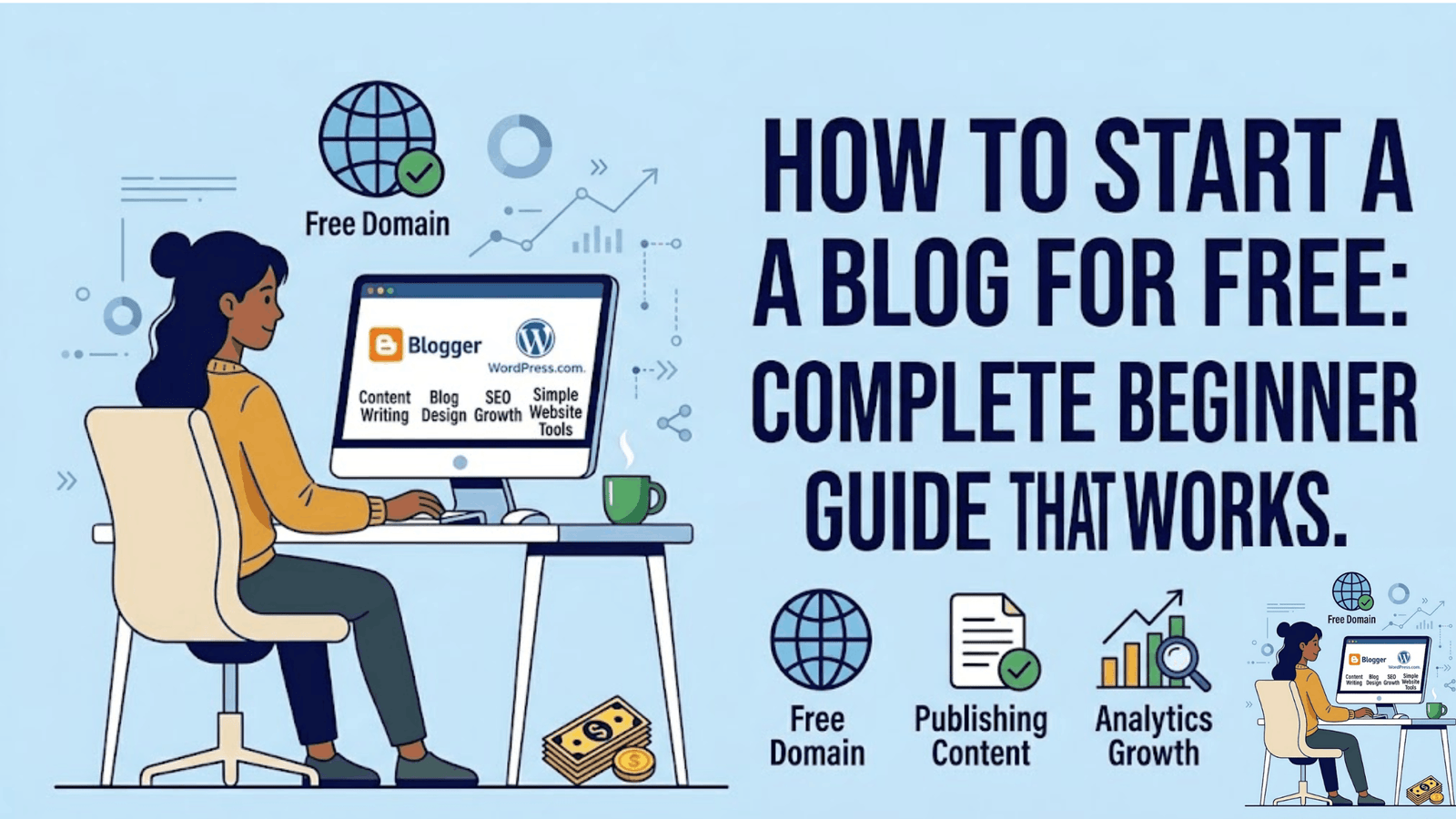
Now you need a platform to publish your blog. Fortunately, several free options exist. For example:
- WordPress.com
- Blogger.com
- Medium
Each platform allows you to start without paying.
However, Blogger gives full free control, while WordPress offers better structure and design. So, choose based on your needs.
In addition, keep things simple at the beginning. Do not overthink the platform choice. Instead, focus on writing and publishing.
Step 3: Create Your Free Blog Account
After selecting a platform, create your account. This step takes only a few minutes.
First, sign up with your email. Then, choose your blog name. After that, select a free domain provided by the platform.
For example, your blog may look like:
yourblogname.blogspot.com or yourblog.wordpress.com
Although this is not a custom domain, it still works perfectly for beginners.
Meanwhile, focus on building content instead of worrying about the URL. Later, you can upgrade if needed.
Step 4: Choose a Simple Blog Design
Now your blog needs a clean design. A simple design improves readability and keeps visitors engaged.
Therefore, select a free theme that looks clean and loads fast. Avoid heavy or flashy designs, as they can slow down your site.
Additionally, make sure your blog works on mobile. Most users read blogs on phones, so mobile-friendly design matters.
After that, organize your menu. Keep it simple:
- Home
- Blog
- About
- Contact
As a result, visitors easily navigate your blog.
Step 5: Plan Your Content Before Writing
Before writing your first post, plan your content. This step saves time and improves quality.
First, list 10 to 20 blog ideas. Then, group them into categories. For example, if your niche is fitness, you can include:
- Workout tips
- Diet plans
- Weight loss guides
Moreover, planning helps you stay consistent. Without planning, many bloggers stop after a few posts.
So, always think ahead. Also, choose topics that help people solve real problems.
Step 6: Write Your First Blog Post
Now comes the most important step: writing.
First, choose one topic from your list. Then, write a simple introduction. After that, explain the topic in clear steps.
Additionally, avoid complex sentences. Instead, write as if you were talking to a friend.
For example:
- Start with a problem
- Explain the solution
- Add simple steps
- End with a summary
Moreover, keep paragraphs short. This improves readability and keeps readers engaged.
Finally, focus on helping the reader instead of impressing them.
Step 7: Use Free Tools to Improve Your Blog
Now you can improve your blog using free tools. Fortunately, many tools exist for beginners.
For example:
- Canva for images
- Grammarly for writing help
- Google Docs for drafting
- Google Keyword Planner for SEO ideas
Additionally, these tools help you create better content without spending money.
However, do not overload your workflow. Instead, use only what you need.
As a result, your blog stays simple and efficient.
Step 8: Learn Basic SEO from the Start
SEO helps people find your blog on search engines like Google. Therefore, you must understand the basics early.
First, include your keyword naturally in your content. Then, add headings to structure your article. After that, write clear titles.
Moreover, use internal linking when you publish more posts. This improves your blog structure.
In addition, avoid keyword stuffing. Instead, focus on natural writing.
Google rewards useful and readable content. So, always write for humans first.
Step 9: Publish Consistently
Consistency matters more than perfection. Therefore, create a simple publishing schedule.
For example:
- 2 posts per week
- or
- 1 post every 2–3 days
Moreover, stick to your plan even if traffic starts slow. Blogging takes time to grow.
Additionally, every new post increases your chance of ranking on Google.
So, keep publishing regularly and improve as you go.
Step 10: Promote Your Blog for Free
After publishing, you must promote your blog. Otherwise, nobody will see it.
You can use:
- Facebook groups
- Quora answers
- Pinterest pins
- Instagram posts
- Online communities
Furthermore, share your content where your audience already exists.
Also, engage with people. Reply to comments and join discussions. As a result, more people can discover your blog.
Step 11: Track Your Progress
Now you need to check your performance. This step helps you improve.
Use free tools like:
- Google Analytics
- Google Search Console
These tools show:
- Traffic sources
- Popular pages
- Search keywords
Additionally, you can see what works and what does not.
Then improve your weak content and expand on your strong topics.
Step 12: Improve Your Blog Over Time
After some time, you can upgrade your blog.
For example:
- Improve old posts
- Add better images
- Fix SEO issues
- Write longer articles
- Add more categories
Moreover, updating content helps you rank better on Google.
So, always keep improving instead of leaving old posts unchanged.
Common Mistakes Beginners Make
Many beginners fail because they:
- Stop too early
- Choose too many topics
- Ignore SEO
- Copy content
- Expect quick results
However, blogging rewards patience. Therefore, avoid rushing.
Instead, concentrate on learning and improving one step at a time.
Why Free Blogging Works
Free blogging gives you a risk-free start. Therefore, you can test ideas without pressure.
Additionally, it helps you learn writing, SEO, and content creation.
Moreover, many bloggers upgrade later as their traffic grows.
So, starting free is not a limitation. Instead, it is a smart beginning.
Final Thoughts
Starting a blog for free becomes simple when you follow a clear and proper process. First, choose your niche. Then, create your blog. After that, write helpful content and stay consistent.
Moreover, success does not come overnight. It comes from steady effort and learning.
So, take action today. Do not wait too long to get started. Instead, start now and improve along the way.
Every successful blog starts with its very first post. Yours can start today.
Read More:
How to Start a Blog and Make Money?
How to Start a Blog Website?
How to Start a Blog Post?
How to Start a Blog?
About the Author